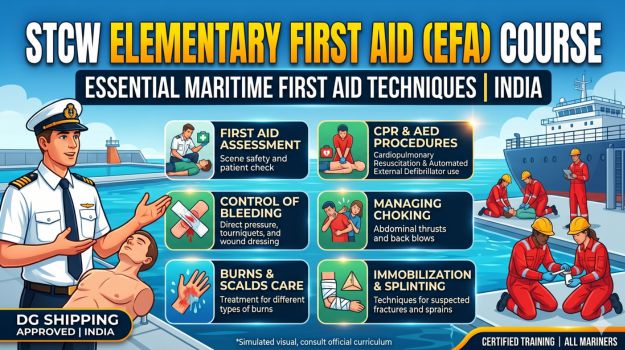
Welcome to the third installment of your maritime safety preparation on Nirzara. As you move deeper into the syllabus, the DG Shipping online exam starts shifting toward highly specific, situation-based challenges. To make sure you don't get caught off guard by tricky scenarios, our EFA Exit Exam Mock - Questions and Answers Set 3 delivers 30 high-frequency Multiple Choice Questions (MCQs) designed by maritime experts.
This specific set on Nirzara focuses heavily on practical injuries and unexpected shipboard health hazards. Here, you will test your understanding of proper wound dressing techniques, managing severe chemical burns from cargo handling, treating internal bleeding, and responding to sudden poisoning on board. Working at sea means professional medical help is often days away, which is why the STCW guidelines require seafarers to be flawless in these initial first-aid actions.
Every question in this mock test comes with its precise, verified answer, giving you an immediate reality check of your preparation level. Rather than just skimming through textbooks, practicing with Nirzara's structured sets helps you build the decision-making speed needed for the real computer-based test. Spend a few minutes solving these 30 questions, analyze your mistakes, and boost your confidence to clear your DG Shipping exit exam on the very first attempt!
Practice with 30 questions from the BASIC EFA COURSE bank. Each question is verified and explained.
MCQ Practice Questions (30)
Live Mock TestQuestion 1 / 30
Time Left: 15:00
Loading question...
🎉 Mock Test Complete
Your Examination Result
0 / 30
Score Percentage: 0%
Correct
0
Incorrect
0
Skipped
0
1
When you see a victim
aRestore his breathing and heart beat
bAsk his KYC details
cAsk his health details
dEngage him
Correct Answer: Option A
Upon discovering a victim, maritime safety protocols, specifically under STCW Code A-VI/1 (Basic Safety Training) and SOLAS Chapter III (Life-saving Appliances and Arrangements), mandate immediate life-saving first aid. Restoring essential vital functions like breathing and heartbeat through Cardiopulmonary Resuscitation (CPR) is the paramount initial action, critical for preserving life and preventing further deterioration of the victim's condition. This immediate response is a fundamental component of mandatory medical first aid training for all seafarers.
2
Hot food should be served normally
a40 degree centigrade
b50 degree centigrade
c60 degree centigrade
d70 degree centigrade
Correct Answer: Option D
Hot food must be served at a minimum temperature of 70 degrees Celsius to effectively prevent the growth of harmful bacteria and ensure the safety of all personnel on board. This temperature is crucial as it keeps the food well above the recognized "danger zone" for bacterial proliferation, which is typically between 5°C and 60°C. Adhering to this standard is a fundamental requirement for maritime food hygiene, safeguarding against foodborne illnesses in line with international health and safety guidelines applicable to vessels.
3
Signs of major stroke are
aParalysis of hands or feet
bParalysis on one side of body
cUnconsciousness
dAll the above
Correct Answer: Option D
A major stroke is characterized by significant neurological deficits, where paralysis affecting limbs (Option A) or an entire side of the body (Option B) are classic indicators due to brain damage. Furthermore, severe cerebral events can lead to altered consciousness, including unconsciousness (Option C); therefore, all listed options are correct signs requiring immediate emergency medical response as per STCW standards for medical first aid and care.
4
For the poison attacked victim, look for
aSmell of breath
bBurns around the mouth
cLabels on nearby canes or bottles
dDo every thing
Correct Answer: Option D
For a poison-attacked victim, "Do everything" is the correct maritime first aid principle as it encompasses a comprehensive and systematic approach crucial for life preservation. This mandates immediate assessment of vital signs, identifying all potential symptoms (like breath odor or burns), gathering critical information from the scene (such as labels on containers), and initiating appropriate first aid measures and medical assistance as per STCW A-VI/4 standards. Focusing on only one aspect is insufficient and can delay vital interventions or information necessary for effective treatment and reporting.
5
The unconscious or recovery position should be used for a casualty who is breathing but unconscious. Why?
aTo prevent the casualty drowning in his own vomit
bTo minimize nose bleeding
cTo correct for any spinal injury
dTo ease the pain of broken bones
Correct Answer: Option A
The recovery position is employed for an unconscious but breathing casualty specifically to prevent aspiration, a critical risk where stomach contents, blood, or secretions could enter the lungs. By placing the casualty on their side with the head tilted back, gravity ensures that any vomit or fluids drain safely from the mouth, thereby maintaining a clear airway. This action is paramount in maritime first aid to prevent suffocation and protect the casualty's respiratory system.
6
Dislocation of bone means
aHand bone fracture
bLeg bone fracture
cMovement of bone end out of joint
dAll the above
Correct Answer: Option C
Dislocation of a bone specifically means the movement of a bone end entirely out of its normal position within a joint, causing the joint surfaces to lose contact. Understanding this distinction from a fracture is vital for all seafarers, as correct identification enables proper immediate first aid and stabilization according to STCW medical training standards and onboard safety protocols.
7
Extreme cold over exposure is called
aHyperthermia
bHypothermia
cInterthermia
dExpothermia
Correct Answer: Option B
Option B, Hypothermia, correctly identifies the condition of extreme cold overexposure. This critical medical state occurs when the body loses heat faster than it can produce it, leading to a dangerously low core temperature, a primary concern in maritime safety and medical first aid training under STCW standards. Understanding hypothermia is crucial for crew survival and effective emergency response in cold environments at sea.
8
Reasons for anisakiasis
aElectric shock
bFallen from height
cExposure to cold weather
dWorm type parasite found in raw or undercooked seafood
Correct Answer: Option D
Anisakiasis is a parasitic infection of the gastrointestinal tract in humans, caused specifically by the ingestion of larval nematodes, commonly known as Anisakis worms. These worm-type parasites naturally reside in the flesh of various marine fish and cephalopods, and the infection occurs when such seafood is consumed raw or undercooked. Maintaining proper food handling and cooking standards on board vessels is a critical maritime safety and health practice to prevent crew illnesses like anisakiasis, making Option D the correct explanation.
9
If the poison case victim moved to hospital
aBring the information about chemical or poison consumed
bBring the cargo information sheet
cBring material safety data sheet
dDo all the above
Correct Answer: Option A
In a medical emergency involving suspected poisoning, quickly providing the attending medical personnel with precise details of the chemical or poison consumed is paramount for immediate and effective treatment, directly aligning with maritime safety and emergency response protocols. This critical information allows for targeted antidotes or interventions, potentially saving the victim's life. While other documents might offer supplementary information, the specific identity of the ingested substance is the most urgent and vital piece of data.
10
Reasons for Typhoid fever are
aBacteria in shellfish
bBacteria in diary products
cBacteria in vegetable
dAll the above
Correct Answer: Option D
Typhoid fever is caused by the bacterium *Salmonella Typhi*, which can contaminate various food and water sources. Therefore, consumption of contaminated shellfish, dairy products, or vegetables can all lead to infection, making "All the above" the correct answer according to maritime hygiene and public health standards mandated by international conventions like SOLAS. Maintaining strict sanitary practices in food preparation and water supply onboard is paramount to preventing the transmission of such diseases.
11
Botulism come from eating
aHalf boiled vegetables
bContaminated water
cSmoked meat
dBoiled eggs
Correct Answer: Option A
Botulism is a serious foodborne illness caused by toxins produced by the bacterium *Clostridium botulinum*, which thrives in anaerobic environments with low acidity. Half-boiled vegetables, especially those improperly preserved or handled, can provide these ideal conditions for bacterial growth and toxin production. Inadequate heating, as in "half-boiling," may not effectively destroy the spores, allowing them to germinate and release potent neurotoxins.
12
Open abdominal wounds required
aFirst aider advise
bDoctor advise
cSelf medication
dWill get cure automatically
Correct Answer: Option B
Open abdominal wounds are critical, life-threatening injuries demanding immediate, professional medical assessment and management to prevent severe complications like infection or evisceration. In accordance with maritime safety regulations, STCW medical care standards, and the International Medical Guide for Ships, the Master or designated medical person must seek qualified medical advice from a doctor for such serious trauma, as definitive on-board treatment is impossible and vital for patient survival. This remote consultation guides the ship's crew in providing the best possible care until professional medical facilities can be reached.
13
Major type of food poisoning are
aTwo types
bThree types
cFour types
dFive types
Correct Answer: Option C
The four major types of food poisoning are specifically categorized as bacterial, viral, parasitic, and chemical/toxin-induced. These distinct classifications represent the primary pathogenic agents and mechanisms causing foodborne illness, which is critical knowledge for maintaining health and safety on board. Adherence to strict food hygiene practices, as mandated by international maritime health regulations and STCW standards, is essential to prevent all four types and ensure crew fitness for duty.
14
In confined space hazard, you can shift the victim before splinted, for the broken bone case
aYes
bNo
Correct Answer: Option B
No, a victim with a suspected broken bone in a confined space should generally not be moved before it is properly splinted. Uncontrolled movement of an unstable fracture can severely worsen the injury, potentially causing further tissue damage, nerve impairment, or converting a simple fracture into a more complex, open wound. Maritime safety and first aid standards mandate immobilizing such injuries prior to movement to prevent additional harm, prioritizing the victim's long-term well-being.
15
If you can hold a breath for long time, then you can enter confined space
aNo
bYes
Correct Answer: Option A
Holding one's breath offers absolutely no protection against the inherent dangers of a confined space, which include immediate risks such as oxygen deficiency, toxic gases, and flammable atmospheres. Safe entry into confined spaces is governed by stringent maritime regulations, including SOLAS and the ISM Code, requiring a formal Permit-to-Work system, thorough atmosphere testing, continuous ventilation, and the presence of trained stand-by personnel. Relying on personal breath-holding ability completely disregards these critical safety protocols and can lead to severe injury or fatality.
16
First aid is the immediate care for
aInjuries
bBurns
cSprains
dAll the above
Correct Answer: Option D
First aid is defined as the immediate care provided to any person suffering from a sudden illness or injury, encompassing a broad range of conditions including injuries, burns, and sprains, as mandated by STCW and general maritime safety principles. Therefore, "All the above" accurately reflects the scope of first aid in a maritime context. This comprehensive approach ensures that all potential immediate medical needs of seafarers are addressed effectively.
17
Dengue fever is caused by Aedes Mosquitoes
aNo
bYes
Correct Answer: Option B
The correct answer is Option B, "Yes." Dengue fever is indeed transmitted by the Aedes mosquito, and understanding such public health threats is crucial for maintaining crew health and operational continuity in accordance with maritime safety and STCW regulations concerning seafarer well-being. Preventing vector-borne diseases on board is a key aspect of shipboard medical preparedness and crew safety management.
18
Check the pulse of victim atleast for
aOne minute
bTwo minutes
cFive seconds
dThirty seconds
Correct Answer: Option D
According to current maritime first aid protocols aligned with STCW requirements, checking for a pulse to determine circulation status should be conducted for a maximum of thirty seconds to efficiently assess the victim's condition and initiate life-saving interventions promptly. Prolonged pulse checks, as suggested by options A and B, delay critical resuscitation efforts, while an excessively short duration like option C may lead to misinterpretation of the victim's status.
19
While removing contaminated dress from a person, make sure dress should not pass through the face
aYes
bNo
Correct Answer: Option A
The correct answer is A, "Yes," because preventing contaminated dress from passing over the face is crucial to avoid re-contaminating the casualty and potentially exposing the rescuer to hazardous substances, aligning with fundamental principles of maritime first aid and personal protective equipment usage. This practice is essential for maintaining decontamination protocols and preventing the spread of hazardous materials, a key tenet of maritime safety regulations designed to protect both the victim and the response personnel. Adherence to such procedures ensures that the casualty receives effective treatment without further risk of exposure or harm, directly supporting the objectives of STCW and general marine engineering safety standards.
20
Stroke symptom vary depend on minor or major
aNo
bYes
Correct Answer: Option B
Yes, stroke symptoms can vary significantly in severity, ranging from minor transient ischemic attacks (TIAs) with temporary deficits to major strokes causing permanent disability, a concept crucial for immediate recognition and appropriate maritime medical response under STCW. This variability necessitates vigilance as any neurological symptom on board could indicate a serious medical emergency requiring prompt assessment and potential evacuation. Recognizing this spectrum of symptoms is fundamental to effective onboard first aid and communication with shore-based medical authorities, aligning with general maritime safety principles.
21
Vaccines are available for
aPolio
bDiphtheria
cCholera
dAll the above
Correct Answer: Option A
While vaccines for diphtheria and cholera are indeed vital for public health, STCW and maritime regulations primarily emphasize the availability and mandatory carriage of specific vaccines crucial for the crew's health and operational readiness in diverse global ports. Polio vaccination is a universally recognized and often required immunization, directly impacting international maritime travel and crew well-being as per established health protocols.
22
Gas poisoning occurs when a person is
aExposed to concentration of gases
bExposed to concentration of vapors
cIn hailing of chemicals
dAll the above
Correct Answer: Option D
Gas poisoning is a broad term encompassing the adverse effects of inhaling harmful substances in various forms; therefore, exposure to concentrations of gases, vapors, or direct contact with chemicals can all lead to poisoning, as recognized by maritime safety regulations such as SOLAS Chapter VI and general principles of occupational health at sea. This comprehensive understanding is crucial for cadets to identify all potential routes of hazardous exposure in a maritime environment.
23
Stroke is caused by
aSevere cold
bBlood vessel rupturing in the brain
cSevere hot
dExcessive alcohol
Correct Answer: Option B
A stroke, a critical medical emergency onboard, occurs when blood supply to part of the brain is interrupted or reduced, commonly due to a blood vessel rupturing in the brain, as per maritime medical guidelines that emphasize prompt recognition and treatment of such conditions to maintain crew safety and operational continuity. This aligns with STCW requirements for maintaining a safe working environment and ensuring the well-being of all seafarers through appropriate medical preparedness. Understanding the physiological cause is essential for crew to provide accurate information to medical professionals and to assist in emergency response procedures as outlined in shipboard medical manuals.
24
Carbon monoxide poisoning required
aFirst aider advise
bDoctor advise
cSelf medication
dWill get cure automatically
Correct Answer: Option B
Carbon monoxide poisoning is a serious medical emergency requiring immediate professional medical attention to ensure proper diagnosis and treatment, therefore Doctor advice is essential for proper management as per maritime medical guidelines. Self-medication or waiting for automatic recovery is extremely dangerous and can be fatal.
25
Loss of consciousness required
aFirst aider advise
bDoctor advise
cSelf medication
dWill get cure automatically
Correct Answer: Option B
In cases of loss of consciousness, the SOLAS and STCW conventions mandate that immediate medical professional consultation is required, as only a doctor can properly diagnose the cause and prescribe appropriate treatment to prevent further harm or fatality. Relying on self-medication or assuming a condition will resolve automatically is dangerous and unprofessional, while first aider advice is a preliminary step, not a substitute for definitive medical diagnosis and treatment.
26
If a person is dead, then still you need to try first aid
aYes
bNo
Correct Answer: Option B
Under international maritime regulations, including SOLAS and STCW, first aid is intended to preserve life, prevent further injury, and promote recovery. If a person is definitively deceased, further medical intervention is not applicable, and the focus shifts to proper procedures for handling deceased individuals. Therefore, attempting first aid on a deceased person is not appropriate or required by safety standards.
27
Signs of dislocation are
aPain
bDiscoloured area
cSwelling
dAll the above
Correct Answer: Option D
Dislocation injuries often present with a combination of symptoms including significant pain, visible discolouration due to bruising or internal bleeding, and noticeable swelling around the affected joint. Therefore, recognizing all these indicators as potential signs of dislocation is crucial for proper initial assessment and prompt maritime medical assistance as mandated by maritime safety protocols. Prompt identification of these combined symptoms allows for appropriate first aid and evacuation procedures to prevent further injury or complications.
28
For a broken bone case
aStop bleeding
bSplint
cPrevent him going into shock
dDo all the above
Correct Answer: Option D
In managing a broken bone casualty at sea, a comprehensive approach is vital for immediate care. You must simultaneously stop any associated bleeding, immobilize the fractured limb with a splint to prevent further injury and pain, and monitor and treat for shock, all of which are encompassed by Option D, "Do all the above," to ensure the best possible outcome as per maritime medical care guidelines. This multi-faceted approach aligns with the principles of prompt and effective first aid mandated by international maritime regulations like STCW.
29
Symptoms for anisakiasis are
aStomach pain
bNausea
cVomiting
dAll the above
Correct Answer: Option D
Anisakiasis, a parasitic infection contracted from consuming raw or undercooked fish containing Anisakis larvae, manifests with a range of gastrointestinal distress symptoms. As per general maritime health and safety guidelines, which indirectly fall under the purview of ensuring crew well-being as outlined in STCW and SOLAS for healthy operations, the typical presentation includes stomach pain, nausea, and vomiting, making "All the above" the comprehensive and correct answer. This understanding is crucial for maintaining crew health and readiness at sea, a fundamental aspect of maritime safety.
30
Dislocations usually caused by
aPoisonous plants
bContaminated water
cFalling
dAll the above
Correct Answer: Option C
Dislocations are traumatic joint injuries where the bones of a joint are forced out of their normal alignment, and the most common cause of such injuries in a maritime environment is falling due to the dynamic and often uneven surfaces of a vessel. Adherence to maritime safety protocols and proper situational awareness, as mandated by STCW, are crucial to prevent such accidents. While contaminated water and poisonous plants present other health risks, they do not directly cause physical dislocations.
About Me
NIRZARA TEAM
Author & Contributor
The Nirzara Team is a group of dedicated marine professionals and educators committed to improving maritime learning through digital education. Our team works to provide quality study materials, practical knowledge, and career guidance to support seafarers and marine students worldwide.