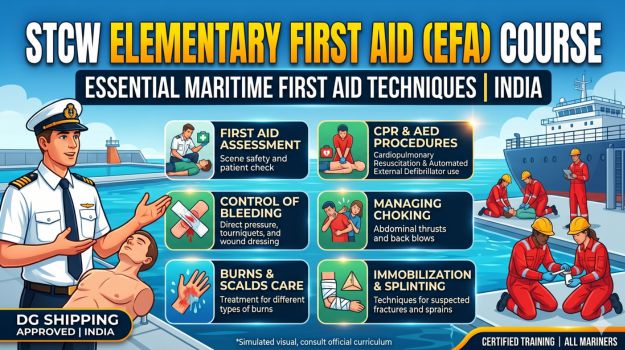
Reaching the fifth milestone of your maritime training on Nirzara, we present the EFA Exit Exam Mock - Questions and Answers Set 5. This particular set shifts the spotlight toward some of the most time-sensitive life-and-death scenarios out at sea. When a crew member stops breathing or loses consciousness, every single second counts, and the official DG Shipping online test heavily evaluates your capacity to handle such high-pressure crises.
This carefully compiled set on Nirzara includes 30 essential Multiple Choice Questions (MCQs) centered around respiratory emergencies. You will face questions on handling asphyxia (suffocation), rescuing a drowning casualty, managing carbon monoxide poisoning from confined spaces, and positioning an unconscious seafarer in the recovery position. Because medical help is thousands of miles away across the ocean, understanding these STCW protocols thoroughly is mandatory for your safety clearance.
Nirzara’s primary goal is to strip away the confusion of identical-looking options in the computer-based test. Each of the 30 MCQs in Set 5 comes with its direct, verified answer, giving you the clarity needed to fix your mistakes instantly. Practicing this set will sharpen your decision-making reflexes, enhance your theoretical depth, and prepare you to tackle the actual exam with zero hesitation. Dive into Set 5 today, test your current score, and secure your passing marks on the very first try!
Practice with 30 questions from the BASIC EFA COURSE bank. Each question is verified and explained.
MCQ Practice Questions (30)
Live Mock TestQuestion 1 / 30
Time Left: 15:00
Loading question...
🎉 Mock Test Complete
Your Examination Result
0 / 30
Score Percentage: 0%
Correct
0
Incorrect
0
Skipped
0
1
In the broken bone case, you can immediately try to re locate the broken bones
aYes
bNo
Correct Answer: Option B
Attempting to relocate a broken bone without proper medical training and equipment can cause further severe damage, including nerve injury, blood vessel damage, and increased pain. Immediate first aid focuses on immobilizing the injured limb to prevent these complications and managing shock while awaiting professional medical attention as mandated by maritime safety protocols.
2
Symptoms of tuberculosis (TB)
aCough with sputum or blood
bWeight loss
cNight sweats
dAll the above
Correct Answer: Option D
As per SOLAS and STCW, maintaining the health and well-being of seafarers is paramount for operational safety and efficiency. Tuberculosis is a serious infectious disease, and all the listed symptoms—cough with sputum or blood, weight loss, and night sweats—are recognized indicators of the illness, requiring immediate attention and medical assessment to prevent outbreaks and ensure crew readiness. Therefore, "All the above" correctly encompasses the symptomatic presentation of tuberculosis relevant to maritime health protocols.
3
Keep the third degree burn victim with
aHead elevated
bBody elevated
cLeg elevated
dHands elevated
Correct Answer: Option C
When dealing with a third-degree burn victim, elevating the affected limb, in this case, the leg, is crucial to reduce swelling and minimize the risk of compartment syndrome by improving venous return, a fundamental principle in advanced first aid as recognized by maritime safety protocols. This elevation helps prevent further tissue damage and aids in the healing process by reducing pressure on the burn site and underlying structures. Proper limb elevation is a standard emergency medical procedure to manage severe burns and is applicable in maritime casualty care.
4
If the victim stopped his breathing
aReport to doctor or captain
bCheck for instructions
cApply first aid medicines
dCheck for his KYC
Correct Answer: Option A
When a casualty stops breathing, immediate action is critical; reporting to the ship's doctor or captain initiates a coordinated response as per maritime safety protocols, ensuring appropriate medical attention and command oversight according to SOLAS and STCW guidelines. This communication allows for the swift application of advanced life support and facilitates timely evacuation if necessary, a primary concern for vessel safety and personnel well-being. Prompt reporting is the foundational step for any emergency medical situation onboard a vessel.
5
Frost bite occurs when
aTaking lot of ice-cream
bDrinking cold water
cExposure to cold weather causes fluids under the skin to freeze
dAll the above
Correct Answer: Option C
Frostbite is a serious medical condition resulting from prolonged exposure to sub-zero temperatures where bodily tissues freeze, typically affecting extremities. International maritime safety standards, such as those outlined in the STCW convention and SOLAS, emphasize the prevention and management of cold-related injuries, including frostbite, due to the significant hazards faced by seafarers in cold environments. Therefore, the correct understanding of frostbite is crucial for maintaining crew welfare and operational safety at sea.
6
STD means
aSafe transmitted diseases
bSeafarer transmitted diseases
cSexually transmitted diseases
dSelf transmitted diseases
Correct Answer: Option C
STD stands for Sexually Transmitted Diseases, a critical health concern for seafarers. Maintaining the health and well-being of the crew is paramount under STCW and general maritime safety regulations to ensure operational readiness and prevent onboard outbreaks. Recognizing and addressing STDs is integral to the overall health management and safety protocols on board vessels.
7
Symptoms of angiostrongyliasis are
aHeadache
bStiffness in back
cStiffness in neck
dAll the above
Correct Answer: Option D
Angiostrongyliasis, a parasitic infection, can manifest with a range of neurological symptoms, including headache, stiffness in the neck, and stiffness in the back, making "All the above" the correct response according to general maritime health and safety guidelines. Adherence to hygiene and food safety protocols, as mandated by STCW, is crucial to prevent such zoonotic diseases onboard. Understanding and recognizing these symptoms is part of a mariner's responsibility to maintain crew well-being and operational readiness.
8
Botulism meaning
aDifficulty in breathing
bFood poisoning caused by a bacterium growing on improperly sterilized tinned meats and preserved foods
cDifficulty in speaking
dAll the above
Correct Answer: Option B
Botulism is a severe form of food poisoning specifically caused by the toxin produced by the bacterium *Clostridium botulinum*, which thrives in anaerobic environments found in improperly sterilized tinned meats and preserved foods. Adhering to strict sterilization and preservation standards for foodstuffs, as outlined by maritime safety regulations and best practices in marine engineering, is paramount to preventing the growth of this dangerous pathogen and protecting crew health at sea. Therefore, Option B accurately defines botulism within a maritime context where the safe handling and storage of provisions are critical.
9
When the victim is pulled out of the contained space and if he is not breathing
aGive two full rescue breaths
bCheck for pulse
cIf no pulse give CPR
dDo all the above
Correct Answer: Option D
Immediate action upon rescuing a non-breathing victim from a confined space requires a multi-step approach for optimal survival chances, aligning with international maritime safety protocols. First, administering two rescue breaths initiates ventilation, followed by checking for a pulse to assess circulatory status, and if absent, commencing CPR to maintain vital functions. Therefore, performing all these sequential steps as a comprehensive response is the correct procedure according to established first aid and maritime emergency guidelines.
10
You can get a disease because of
aVirus in the air
bBitten by insect of animal
cSexually transmitted disease
dAll the above
Correct Answer: Option D
Option D is correct because maritime safety and health regulations, such as those derived from SOLAS and STCW, emphasize comprehensive disease prevention measures encompassing airborne pathogens, vector-borne diseases from insects or animals, and sexually transmitted infections. Understanding and mitigating all these potential transmission routes are critical to maintaining crew health and operational readiness onboard. Therefore, a holistic approach that accounts for all listed factors is mandated to ensure the well-being of seafarers.
11
Frostbitten is severe when
aVictim lost feeling on the frostbitten part
bLooks blue
cBlisered
dAll the above
Correct Answer: Option D
Frostbite severity is indicated by the loss of sensation in the affected area, a bluish discoloration of the skin, and the formation of blisters, all of which are critical signs of deep tissue damage that require immediate medical attention as per established maritime first aid protocols. These symptoms collectively signify that the frostbite has progressed to a severe stage, impacting circulation and cellular integrity, and necessitating advanced care to prevent permanent damage. Understanding these visual and sensory indicators is vital for effective on-board response and victim management under SOLAS and STCW guidelines.
12
Can you give alcohol to drink for a third burn victim
aYes
bNo
Correct Answer: Option B
Providing alcohol to a burn victim, regardless of severity, is strictly prohibited by maritime safety standards and medical best practices. Alcohol can interfere with the body's ability to regulate temperature, dehydrate the victim, and interact negatively with any medications or treatments administered, thus worsening their condition.
13
Diphtheria is means
aElectric shock
bAn acute and highly contagious bacterial disease causing inflammation of the mucous membrane, formation of false membrane in the throat
cExposure to heat
dExpothermia
Correct Answer: Option B
Diphtheria is an acute, highly contagious bacterial disease characterized by the formation of a pseudomembrane in the throat and other mucous membranes, posing a significant health risk to maritime crews and passengers as per international health regulations and crew welfare standards. This condition, if left untreated, can lead to severe respiratory obstruction and systemic toxicity, highlighting the importance of understanding and managing infectious diseases at sea. Therefore, recognizing diphtheria as a specific bacterial infection is crucial for onboard medical response and preventative measures outlined in maritime safety guidelines.
14
If the victim has con pesticide or chemical, then
aMove him out of the place
bGive more fresh air
cGive him some food
dFollow instructions as per cargo information sheet or material safety data sheet
Correct Answer: Option D
When dealing with a victim exposed to pesticides or chemicals, the correct procedure is to **follow instructions as per the cargo information sheet or material safety data sheet (MSDS)** because these documents provide critical, specific guidance on immediate first aid, decontamination, and necessary precautions tailored to the particular substance involved, ensuring the safest and most effective response as mandated by international maritime safety regulations. Improper handling, such as simply moving the victim or providing fresh air without knowing the chemical's properties, could exacerbate the situation or endanger rescuers, whereas the MSDS is the authoritative source for risk mitigation and medical intervention according to SOLAS and STCW standards.
15
Tourniquet can be used as first resort, to stop bleeding
aYes
bNo
Correct Answer: Option B
A tourniquet is a last resort for severe, life-threatening hemorrhage where direct pressure and other measures have failed to control bleeding, as improper application can cause nerve damage and tissue death. Maritime medical guidelines prioritize less invasive methods like direct pressure and elevation to manage bleeding effectively. Therefore, a tourniquet should not be the first resort for stopping bleeding according to established marine first aid protocols.
16
Shock can happen
aWhen badly injured
bWith extreme pain
cWith more fright
dAll the above
Correct Answer: Option A
Shock, a critical medical emergency recognized in maritime first aid protocols aligning with STCW, is primarily a state of inadequate blood circulation to vital organs, most commonly precipitated by significant trauma or severe blood loss from a bad injury. While extreme pain or fright can contribute to a patient's distress, the physiological cascade leading to shock as defined in maritime safety standards is fundamentally linked to the body's inability to maintain essential tissue perfusion due to hypovolemia or other systemic insults, making "when badly injured" the most direct and accurate cause. Therefore, Option A correctly identifies the principal precursor to shock within the context of immediate maritime medical response.
17
In broken bone case, you can remove the wet or bloody clothes
aNo
bYes
Correct Answer: Option B
In a suspected broken bone case, removing wet or bloody clothing is permissible and often necessary for proper assessment and splinting. While maintaining warmth is generally important, the immediate priority is to access and stabilize the injury. This allows for a clear visual inspection and application of the splint directly to the limb, ensuring effective immobilization and preventing further damage, which aligns with basic first aid principles and maritime casualty care standards.
18
When the victim started his own breathing
aClapp for his action
bLeave the place
cStay with the person ungtil medical help arrives
dReport to your duty
Correct Answer: Option B
When a victim regains spontaneous breathing, the immediate priority shifts from resuscitation to continued monitoring and ensuring their safety and well-being until professional medical assistance takes over. As per established maritime safety protocols, leaving the scene to report to your duty ensures that this critical update is communicated to the relevant personnel, allowing for organized management of the incident and the victim's care. This action is paramount for maintaining situational awareness and ensuring efficient deployment of further resources if needed.
19
While showering chemical contaminated person
aRemove his dress
bPut more dress
cLet the dress be there
dCheck for instruction
Correct Answer: Option A
In cases of chemical contamination, immediate removal of contaminated clothing is paramount to prevent further skin absorption and dissemination of the hazardous substance, as mandated by maritime safety protocols and emergency response procedures. This action minimizes the risk of chemical burns, systemic poisoning, and cross-contamination, aligning with principles outlined in SOLAS and STCW for casualty management. Therefore, removing the dress is the critical first step in the decontamination process for a chemically exposed individual.
20
Convulsion means
aBreathing disorder
bSmelling disorder
cTalking disorder
dA sudden, violent, irregular movement of the body, caused by involuntary contraction of muscles and associated especially with brain disorders such as epilepsy, the presence of certain toxins or other agents in blood, or fever in children
Correct Answer: Option D
A convulsion is a medical emergency defined as involuntary muscular contractions leading to sudden, irregular body movements, often indicative of serious underlying conditions such as epilepsy, toxic exposure, or severe fever, and is crucial for maritime medical first aid protocols as per STCW. Understanding this precise definition is vital for appropriate casualty management and ensuring the safety and well-being of all personnel onboard, aligning with international maritime safety standards.
21
After every 12 breaths, check the victim’s pulse
aYes
bNo
Correct Answer: Option B
The correct answer is "No" because current advanced first aid protocols, which align with maritime safety standards, dictate that after providing 30 chest compressions in CPR, you should give 2 rescue breaths, not check for a pulse after 12 breaths. Continuous, effective CPR with the correct compression-to-ventilation ratio is crucial for maximizing oxygen delivery to the brain and vital organs during cardiac arrest.
22
On second degree burn if 15 percentage of body is affected take the victim to the hospital
aNo
bYes
Correct Answer: Option B
Under STCW and maritime safety standards, any second-degree burn affecting more than 10% of the body's surface area constitutes a severe medical emergency requiring immediate professional medical attention at a hospital. Fifteen percent body surface area for a second-degree burn clearly exceeds this threshold, mandating prompt evacuation. Therefore, taking the victim to the hospital is the correct course of action.
23
Eye injuries required
aFirst aider advise
bDoctor advise
cSelf medication
dWill get cure automatically
Correct Answer: Option B
According to STCW regulations and general maritime safety principles, any significant eye injury requires the assessment and advice of a qualified medical professional, such as a doctor, to ensure proper diagnosis, treatment, and prevention of long-term damage. Relying on a first aider for definitive diagnosis, self-medication, or expecting automatic recovery for eye injuries is contrary to established safety protocols for seafarers. Therefore, "Doctor advise" is the correct response, prioritizing expert medical intervention for potentially serious conditions.
24
Reasons for Giardiasis are, bacteria found in
aWater
bDiary products
cFruits and vegetables
dAll the above
Correct Answer: Option A
Giardiasis is a parasitic infection caused by the protozoan *Giardia lamblia*, which is primarily transmitted through contaminated water sources, aligning with maritime safety standards concerning potable water hygiene. STCW regulations mandate ensuring safe drinking water onboard to prevent waterborne diseases like giardiasis. Therefore, the bacteria (more accurately, a protozoan parasite) are found in water.
25
When eye contamination happens, first you should
aTake victim to ventilated space
bGive CPR
cCheck his pulse
dFlush eyes with plenty water
Correct Answer: Option D
Maritime safety protocols, aligned with SOLAS and STCW, mandate immediate irrigation of eyes upon chemical or foreign object contamination to minimize tissue damage and prevent long-term injury. Therefore, flushing the eyes with copious amounts of clean water is the immediate and most critical first aid action. This action takes precedence over other responses as it directly addresses the contaminant and its immediate effects.
26
Heat stroke person would sweating profusely for a short time but will not sweat at all
aNo
bYes
Correct Answer: Option B
Heat stroke is a critical medical emergency characterized by a core body temperature exceeding 104°F (40°C), initially presenting with profuse sweating that can rapidly cease as the body's thermoregulation fails, leading to dry, hot skin. This cessation of sweating is a hallmark sign of severe heat illness, indicating the body can no longer cool itself effectively, a condition of utmost importance in maritime safety protocols for immediate first aid.
27
Onboard ship memorize the location of phone and intercoms
aRequired
bNot required
Correct Answer: Option A
Option A is correct as maintaining immediate communication capabilities is a critical safety requirement under SOLAS Chapter IV, ensuring prompt distress alerting and coordination during emergencies. Familiarity with communication equipment locations, including phones and intercoms, is essential for effective crew response as mandated by STCW standards for emergency preparedness and shipboard organization. Proficiency in using and locating these vital communication systems directly contributes to overall maritime safety and efficient ship operations in all situations.
28
For a unconscious victims
aGive first aid
bRoll on their sides so that fluids can drain from their mouth
cGive more ventilation
dCover with blanket
Correct Answer: Option B
Option B is correct because for an unconscious victim, especially if there's a risk of vomiting or fluid buildup, placing them in the recovery position (on their side) is crucial as per maritime first aid protocols, preventing aspiration and ensuring an open airway. This procedure aligns with established marine safety and first aid standards to maintain vital life support until professional medical help arrives.
29
When a clean pad is available, for heavy bleeding
aCheck its expiry dates
bPlace the pad on the wound and press firmly
cUse it for cleaning blood
dAll the above
Correct Answer: Option D
Option D is correct because, according to maritime medical and safety protocols like those outlined in STCW, when a sterile pad is available for heavy bleeding, you must first ensure it is sterile by checking expiry dates (A), then apply it correctly by placing it on the wound and pressing firmly (B), and it's never to be used for cleaning as that would compromise sterility and introduce infection (C).
30
Treatment for hypothermia are
aTake the victim inside
bCover with the blankets
cGive warm water if conscious
dAll the above
Correct Answer: Option D
Correct treatment for hypothermia involves a multi-faceted approach encompassing all listed actions: removing the victim from the cold environment, insulating them with blankets to prevent further heat loss, and carefully rewarming them with warm fluids if conscious, aligning with established maritime safety protocols. These measures collectively aim to gradually restore the body's core temperature, as mandated by SOLAS and STCW standards for casualty care.
About Me
NIRZARA TEAM
Author & Contributor
The Nirzara Team is a group of dedicated marine professionals and educators committed to improving maritime learning through digital education. Our team works to provide quality study materials, practical knowledge, and career guidance to support seafarers and marine students worldwide.